Some mountain communities are built around crowds and convenience. Pinehaven grew differently. Tucked into the forested slopes above Cuchara, Pinehaven slowly emerged from the mountain itself, shaped by the land and the families who returned to it year after year. What follows are some of the qualities that continue to make Pinehaven unlike anywhere else in the valley.
Among the Trees
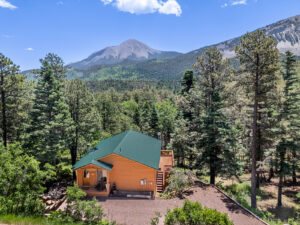 The forest has always shaped life in Pinehaven. Even today, the trees remain one of Pinehaven’s defining features. Cabins rest beneath their shade, mountain winds move through their branches, and the scent of pine settles into nearly every memory people carry home from the mountain.
One of the first things people notice while driving into Pinehaven is the scent of ponderosa pine drifting through the mountain air. Mixed among the ponderosa are groves of quaking aspens that shimmer constantly in the mountain breeze, their leaves turning entire hillsides gold each autumn. In cooler draws and shaded slopes, Douglas fir and white fir rise quietly above the forest floor, giving certain corners of Pinehaven the feeling of an older, deeper wilderness. They shape the smell of the mountain after rain, the movement of wildlife through the forest, the drifting patterns of winter snow, and the sense that cabins here belong within the landscape rather than sitting on top of it.
As the elevation climbs higher above Pinehaven, the forest slowly changes again. Engelmann spruce and subalpine fir begin appearing along the upper slopes and shaded basins, while blue spruce gather near creeks and wetter pockets of ground, adding deep color to the mountain landscape throughout the year.
Unlike many mountain developments carved aggressively into open ground, Pinehaven grew within the forest rather than replacing it. Roads curve around stands of timber, cabins remain partially hidden beneath the canopy, and the mountain still feels inhabited gently rather than conquered.
Wild Neighbors
.
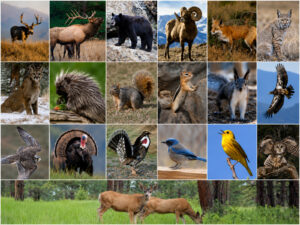 In Pinehaven, wildlife is not something people need binoculars to see. Deer graze near cabins, hawks circle above the valley, and foxes slip quietly through the timber at dusk. Even today, residents wake to humming birds buzzing outside windows, wild turkeys wandering the roads, and the sudden flash of a fox slipping into the timber at dusk. Some animals remain rarely seen but frequently felt through the tracks of a mountain lion crossing the dirt roads at night, bear paws pressed into mud after a rainstorm, or the uneasy silence that settles over the forest when something larger is nearby. Living in Pinehaven has never meant separating from nature. It has meant learning to live within it.
For many families, some of their strongest Pinehaven memories were tied not to buildings or roads, but to encounters with the mountain itself. Stories about porcupines, hawks, hidden nests, or the occasional glimpse of a bobcat vanishing through the trees are common. Winter mornings often revealed fresh animal tracks crossing the snow before the community had fully awakened, while summer evenings filled the air with the sounds of warblers, jays, and wind moving through the high country. Over time, Pinehaven modernized in many ways, but the wildlife never entirely retreated. The mountain continued to remind residents that they were guests in a landscape still governed by older rhythms, where the wild never fully disappeared.
Unforgettable History
.
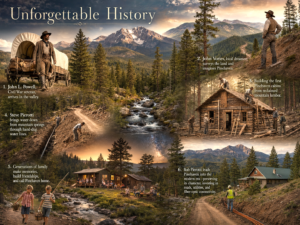 Pinehaven’s story began on rugged mountain land above Cuchara, where the sound of wind moving through the pines and water slipping down the mountain were once the only signs of life. The land first came into the hands of Civil War veteran John L. Powell, who arrived in the valley by covered wagon after a lifetime shaped by war, hardship, and the restless pull westward. For years, the property remained largely untouched beneath the shadow of the Spanish Peaks. Then came John Vories, a local dreamer who looked across the rugged hillside and imagined families building cabins among the trees. With little more than determination, he carved the first cabin lots into the mountainside. The roads were steep, the terrain unforgiving, and some of the earliest cabins were built from lumber hauled out of abandoned mining camps scattered through Huerfano County. Pinehaven did not rise quickly or neatly. It grew slowly out of the mountain itself.
As the years passed, Pinehaven became the kind of place people did not simply visit, but carried with them for the rest of their lives. Steve Pierotti helped shape much of that early spirit, expanding roads through the forest and even bringing water down from hidden springs high on Raspberry Mountain through hand-dug water lines. Cabins slowly multiplied across the mountainside, but the mountain still felt wonderfully untamed. Children disappeared into the woods for hours with fishing poles, neighbors gathered on porches beneath dark star-filled skies, and families returned summer after summer to the same winding roads and familiar cabins. Later, Bob Pierotti helped guide Pinehaven into the modern era while protecting the very qualities that made people fall in love with it in the first place.
Over the years, Pinehaven gradually stepped into the modern world. Water systems replaced the old spring-fed lines, sanitation infrastructure improved, fiber optic internet reached the mountain, and the once-rough roads became easier to travel. Yet through all the change, Pinehaven never surrendered the qualities that made it special in the first place. Generations of families kept returning to a place that somehow resisted becoming rushed, crowded, or artificial.
Modern Amenities
.
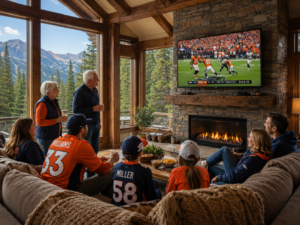 Pinehaven has modern comforts without feeling like a resort town. The community has reliable community water service, sanitation infrastructure, electricity, fiber optic internet, and year-round road access, yet it never drifted into the polished atmosphere of a crowded resort destination. The community still feels personal, unhurried, and grounded in the rhythms of everyday mountain life.
What fills that space instead is something harder to manufacture: genuine neighborliness. After a heavy snowfall, the sound of chainsaws and snowplows often arrives before sunrise as neighbors begin clearing roads and checking on one another. A stuck truck rarely stays stuck for long before somebody shows up with a tow strap and advice. Social media pages bounce between wildlife sightings, weather warnings, lost dogs, and offers to help split firewood. Visitors often describe Pinehaven as “old Colorado,” not because it feels frozen in time, but because it still feels scaled for people instead of crowds. Even with modern conveniences woven into daily life, the community somehow managed to preserve the slower, more connected mountain culture that first drew families there generations ago.
Diverse Ownership
.
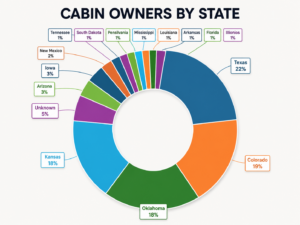 Spend enough time in Pinehaven and you begin to notice something unusual. Parked along the narrow mountain roads are license plates from Texas, Oklahoma, Kansas, Colorado, and states much farther away. Conversations drifting across porches carry accents and stories from different parts of the country, yet somehow they all seem to fit naturally beneath the same canopy of pine and aspen.
According to the 2024–25 Cuchara Directory, Texas now represents the largest share of cabin ownership, followed closely by Colorado, Oklahoma, and Kansas. For generations, families from the Southern Plains have escaped summer heat and busy city life by making the long drive west toward the cool mountain air of Cuchara. Many arrived for a weekend or short vacation only to find themselves returning year after year until Pinehaven slowly became part of their family story.
But Pinehaven has never belonged to just one region. Tucked among the cabins are families from places as far away as Pennsylvania, Florida, Tennessee, Louisiana, and Illinois. Some first discovered the community while exploring Highway 12 through the Spanish Peaks. Others followed friends, relatives, or old memories of childhood summers spent on the mountain. Over time, those different paths began crossing in familiar ways: neighbors waving from UTVs along the gravel roads, children meeting at the same creek bends each summer, and families gathering beneath the trees after years apart as though no time had passed at all. Gradually, Pinehaven became the kind of place where different roads somehow led people to the same sense of belonging. Many families now span multiple generations on the mountain, returning not simply because they own property there, but because Pinehaven gradually became part of who they are.
Digital Front Porch
.
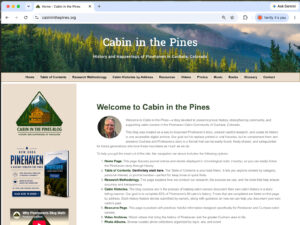 Pinehaven is the only community in the valley with its own living digital history. Through www.CabinInThePines.org, the community has created something far more personal than a neighborhood website. Inside its pages are the stories of covered wagon settlers, hand-dug spring lines, early cabins built from mining camp lumber, wildlife encounters, old photographs, and generations of families who slowly helped shape the mountain community over time. The site also features micro-histories of many Pinehaven cabins, preserving the stories, craftsmanship, memories, and personalities connected to the homes tucked throughout the forest. For many cabin owners living hundreds of miles away, the blog became a year-round connection to the place they still think about long after summer ends and snow settles quietly over the mountain.
Over time, the blog began doing something few mountain communities ever achieve: it gave Pinehaven a shared voice. New cabin owners discovered the history and personality of the neighborhood, while longtime residents saw old memories preserved before they faded away. Stories once traded across porches and campfires now live on for future generations to discover decades from now. At the same time, the blog quietly helps neighbors stay connected through wildfire updates, community projects, wildlife sightings, helpful resources, and the everyday rhythms of mountain life. In many ways, it became Pinehaven’s digital front porch.
In many ways, it became a modern extension of Pinehaven itself, preserving stories, strengthening connections, and helping future generations understand why this mountain community mattered so deeply to the people who loved it.
Part of Legends
.
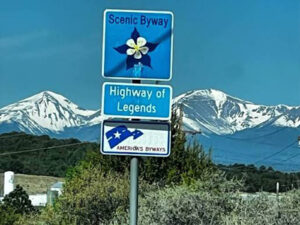 Pinehaven sits within one of the most historic landscapes in southern Colorado. The drive into the valley follows Colorado’s Scenic Highway of Legends, winding through ranchlands, old mining country, railroad towns, and mountain passes layered with generations of history. Rising to the south, the Spanish Peaks dominate the skyline much as they did for traders, travelers, and Native peoples who once used the ancient routes threading through this region. Nearby, the dramatic Great Dikes of Cuchara cut across the mountainsides like stone walls pushed upward from deep within the earth, while the small village of Cuchara still carries the relaxed atmosphere of a mountain town that never fully surrendered to modern resort culture.
At the edge of the valley, Cuchara Mountain Park continues the tradition of the old community ski hills that once gave small Colorado towns their winter heartbeat. Families still gather there not for luxury amenities or crowded lift lines, but for something simpler and more familiar. A little farther north, the old depot and storefronts of La Veta still echo the narrow-gauge railroad era that first connected these isolated mountain valleys to the outside world. Together, these places help Pinehaven feel connected to something larger than itself: the enduring story of southern Colorado’s mountain valleys and the people who have called them home for generations.
Heaven in the Pines
.
Pinehaven is more than a mountain community tucked into the hills above Cuchara. It is a place shaped by forest, history, wildlife, and generations of families who kept returning to the same mountain roads and cabins year after year. Whether arriving for a weekend or returning for generations, many people discover the same thing once they spend time here: Pinehaven is not simply a place people remember. It is a place where people remember feeling at home.
.
Footnotes
Parenthetical numbers in the text (e.g., 5) correspond to the sequentially numbered citations listed below.
Author’s note: In preparing this article, the author used AI-assisted tools for research support, proofreading, fact-checking, and stylistic refinement. All narrative choices, analysis, and historical interpretations are the author’s own, and responsibility for accuracy rests solely with the author. The blog’s research methodology statement is available at https://cabininthepinescuchara.blogspot.com/2019/03/methodology-sources-and-use-of-research.html